Showing posts with label Books. Show all posts

The Entrepreneur as Benevolent Dictator


Michael Feuer's new book, The Benevolent Dictator landed on my desk at exactly the right moment—two months into the launch of my own business enterprise! So as you can imagine, I dove into the book eager to mine some valuable nuggets of wisdom from the mind of a talented entrepreneur who was able to take OfficeMax from very humble beginnings up to its sales in 2003 for $1.5 billion.

Although the book is full of great insights worthy of study and application, the most important take-away for me relates to the role of the entrepreneur as a Benevolent Dictator. Feuer makes it clear that there is no secret sauce; no magic recipe; nor any single piece of sexy advice guaranteed to take your business to dizzying heights of success. Instead, Feuer insists that it comes down to something really simple (though not easy): devising a smart and detailed strategy, and executing that strategy relentlessly. 

Execution, however, requires discipline and a stubborn focus on setting goals and minding the details.  The occasional cracking of the whip comes with the territory. But that doesn't make Feuer a bad guy at all. His heavy hand is always guided by a benevolent sense of service, to customers and employees alike, and by the humility to recognize that he doesn't have all the answers and that the people in his organization are partners who deserve a say in how things are run. 

For me, it's great to see a CEO who is at once strong and assertive, but humble enough to encourage his people to come up with ideas, and to challenge his own when they disagree.

The following passage is my favorite from the book:
As a founder and former CEO of a Fortune 500 company, I have given more than 1,000 talks and speeches over the past 25 or some years. I am invariably asked the same question during each presentation's question-and-answer session: What is a CEO's most important role in the organization? 
The audience doubtlessly expected a pat, text-book-type response–"building a team," "accelerating sales and profits," or "increase shareholders' value." And all of these truly are critically important objectives, each of which provides a barometer of effectiveness and success.
However, my answer to this age-old question was—and still is—"A boss' job is to stir the pot."
I personally disdain the status quo. The trite phrase, "If it ain't broke, don't fix it," sets me off. The comment, "Same old, same old" when applied to a business' progress is, as far as I'm concerned, the first sign that a company is heading into obscurity. Getting a start-up venture off the ground with some modicum of success can lull an entrepreneur into a dangerous mind-set where he or she beings to relax a bit and starts "smelling the roses."
Feuer has organized his thoughts on business into 40 lessons divided among the "four phases" of an entrepreneurial enterprise: (1) Start-up (2) Build Out and Put the Idea to the test (3) Constant Reinvention and (4) The Payday. Although the phases are not fully fleshed out, and while some of the lessons are repetitive, overly expansive and superficial, there is some serious red meat in the book.

The juiciest and most interesting lessons are those about using OPM (Other People's Money) to finance your business. Feuer's genius comes through as he describes (in fairly good detail) how he was able to fund OfficeMax's growth in early and later years without having to deal with overly demanding professional investors (venture capitalists). His myth-busting insights on raising capital are easily worth 100X the price of the book!

There's lots of great advice, that although not particularly original or ground-breaking, is presented in Feuer's clever fashion and is ignored at one's own peril. There's solid advice on how to hire effectively, manage projects, test ideas, change course, encourage innovation, outwit competitors and much more!

Although the book sometimes feels more like a promotional tool than a truly heart-felt treatise on entrepreneurship (there are incessant references to Feuer's Max-Wellness venture in the first half of the book) it provides enough valuable information, humor and even some genuine emotion that compel me to recommend it to you.

If you're thinking of starting a business, or if you're in the middle of launching a business like I am, the advice found in the pages of The Benevelovent Dictator may not be inspirational, but it's highly instructional. Follow Feuer's advice to steer your business in the right direction.

Tell Lots of Stories

Story Time
Photo courtesy of Scottish Libraries
Peter Guber and Bernadette Jiwa have really got me thinking about just how powerful stories can be, not only in building a brand, but in having an impact on the people around you.

Stories are powerful because our brains are hardwired to grasp them easily.

Before the advent of the written word, human beings told oral stories for tens of thousands of years. That's how we survived and endured -- by learning through stories.

Stories cut to the chase.

Even the most complex or technically convoluted concepts can be easily understood if presented as a story. Case in point, you can expound about the wonders of your product  or service 'til you're blue in the face and many customers will still not understand. Tell them a story, on the other hand, and they will instantly "get it".

Stories are just more fun.

They entertain and enlighten. They help you to be at your persuasive best. They give you the power to break old paradigms by allowing your audience to place themselves in the role of the protagonist in your story. You have them in rapt attention. Empathy increases. Understanding ensues.

So given the power of stories, you need to ask yourself two critical questions:

(1) Am I telling enough stories?
(2) And are they good ones?

3 Essential Ways to Boost Your Productivity

People with Evil Plans keep busy. Probably too busy. But keeping busy doesn't equate to being effective or productive.

The key to your success is finding ways to maximize your productivity while minimizing unnecessary stress.

It's possible, and it's downright necessary if you're looking to make a dent in the universe.

So to be more productive, there are 3 essential things you must do.

1. Disconnect
Einstein once said that "We can't solve problems by using the same kind of thinking we used when we created them." It's so true. It's so easy to get sucked in and get caught up in our momentum. The days rush by as we're propelled forward, but in what direction? Are you on track or have you veered off the right path?

You have to disconnect frequently to reassess and plan a more sensible approach. Disconnect a couple of times a day for a few minutes and reassess your effectiveness. Are you just putting out fires or are you working on things that will yield results today AND in the future?

You can also disconnect frequently to take a high level look at your work. Do this on a weekly, monthly or yearly basis. Do it as much (or as little) as you need to feel comfortable that you're on the right track. And remember that rest and leisure are your friends. They'll help you renew and refocus your energy.

2. Singletask
Multitasking is the enemy. It only creates the illusion of speed and actually wears you down. You spin your wheels frantically and don't get very far. It brings unnecessary stress and saps your creative powers. So instead of diluting your energy, focus it! Work on one thing at a time. Focus. Ignore the phone. Turn off email. Don't instant message. Get it done, then move on to the next truly productive task.

3. Batch
Bundle similar tasks together and get them done in one shot. If you have multiple errands to run, batch them together and schedule a single block of time to check them all off your list. At work, don't check email sporadically throughout the day or as they come in. That kills productivity. Instead, block off specific times to deal with email and then shut it off. This'll free up blocks of uninterrupted time to work on your projects.

One last word. All this may sound simple, but it's not particularly easy to do. It takes discipline and determination. So ask yourself, how badly do you want it?

Understanding Your Time Perspective

Time is something we talk about a lot. We talk about spending time, losing time and not having enough time.

I think Professor Phillip Zimbardo, has a very interesting take on time. And I believe he has important things to teach us about  how we perceive time,  and how those perceptions can help us become happier and more effective.

In Zimbardo's 2008 book, The Time Paradox (co-authored with John Boyd), he argues that most people have a “bias” for one of 6 time perspectives:

  1. Past Positive - focused on the pleasant memories and positive experiences of the past;
  2. Past Negative - focused on past traumas or painful memories;
  3. Present Hedonistic - focused on seeking pleasurable experiences in the moment;
  4. Present Fatalistic – focused on lack of control in the present and a "it doesn't matter" view of present actions
  5. Future - focused on discipline and hard work today in order to achieve rewards in the future;
  6. Future Transcendental – heavily focused on a belief in the afterlife; 

The trick, according to Zimbardo is to limit an unhealthy bias towards any one of these time perspectives and to be able to fluidly move from one perspective to another, as the situation requires.

In other words, there’s a three-pronged “optimal time perspective” which will help you stay balanced, successful and happy:

  1. Past Positive - High
    People who view their past as happy tend to exhibit less anxiety, are less aggressive, have more energy and are perceived as friendlier than those who view their past negatively. Interestingly, research suggests that even people who experienced hardships in the past can become past-positive if they can frame their negative experiences in a positive light.
  2. Present Hedonism - Moderate
    Actively seeking pleasurable experiences and doing things that give you enjoyment can help you stay balanced and energetic, but focusing too much on such activities can lead us to "avoid things that require high effort and maintenance, or are that are regularized or boring." Moderation is key.
  3. Future – Moderately High
    Being focused on the future is all about delaying gratification today for a greater reward in the future. Future-based people are good at "planning, scheduling one's time wisely, and anticipating detours and traps that might appear on the path to success". Futures are great problem solvers, know how to persevere and generally make more money than those in the other time perspectives. But again, moderation is the key. Being too focused on the future can lead us to "trade off social pleasures, like spending time with family and friends." Many futures also have a tendency to disregard their own health and spiritual well-being. 
Now, here are three things you can do to enjoy the present while engaging in activities that provide future benefit in your life.

  1. Try to focus more on the good things that happened in your past and practice giving thanks for everything positive that’s come your way.
  2. Take some time each day to slow down, relax, have fun and “smell the roses”. Think of actions you can take in the present that will not only help you feel good now, but that will also help you achieve future goals (e.g. taking a brisk walk with two of your best friends).
  3. Set S.M.A.R.T goals for yourself then make a plan and work a little each day to execute  that plan. A mere 1% improvement per day (or per week), can add up to impressive progress at the end of just one year!
Time is a non-renewable resource. Learning to use it wisely pays huge dividends. 

Delivering Awesomeness: Why You Need to Read Tony Hsieh's New Book

A lot of people have picked up Tony Hsieh's new book, Delivering Happiness: A Path to Profits, Passion and Profit looking for the behind the scenes dirt on Hsieh's sale of Zappos to Amazon. To these people Zappos and its celebrated culture of customer service is not much more than a fairy tale about a company which they proclaim wasn’t the amazing shiny business bundle of joy it was made out to be.

I disregard much of this criticism.

Simply consider the facts. Did Zappos sales not grow from zero to a billion in ten years? Did Amazon, the greatest E-tailer in the world, not pay a billion dollars for Zappos several months ago? Did Tony Hsieh not write about the Zappos story in a public work that can be easily examined and disputed by the very people portrayed therein. And have all my friends, who are customers of Zappos and enthusiastically vouch for the customer service anecdotes in the book, somehow joined Hsieh in his conspiracy to portray Zappos as something more than it actually is?

Quite the contrary.

In the final analysis, I think that Tony Hsieh has produced a book of remarkable candor and courage that's a must-read for anyone who works with customers, or who cares about building a truly great service organization. There's much we can all learn from it and I certainly was left feeling emboldened and inspired to do much more in the area of delighting customers.

That being said, I found the book a little slow and amateurish at the beginning, as Tony recounts his earliest experiences in commerce (including a stint with a worm farm and experimentation with mail order). The first 20 pages are actually a little hard to take but the book gains strength with each subsequent chapter.

That's not to say, however, that there aren't a few amateurish lapses along the way.

At one point Tony goes into an inexplicable (and completely irrelevant) one page rant about his "Red Bull Relationship", as well as musings about raves and a reference to Taco Bell's double decker taco value meal! As a result, I think that bizfolk outside of Hsieh's age cohort may have trouble relating to the general message of Delivering Happiness.

No matter.

I get the sense that this book is a manifesto for the twenty and thirty-somethings out there looking to help their organizations break old paradigms and usher into the real future of business in the 21st century.

This book is decidedly NOT for 50 year old CEOs!

Older business people will just find Hsieh's story bewildering: how he lazily got through 4 years at Harvard; how he quit his first, well-paying job at Oracle after just a few months; how he stumbled upon a great idea for a dot com era startup and became rich practically overnight, and much more. It's all a bit surreal.

And the book stays in a meandering sort of mode until Hsieh gets to the part about Zappos.

In fact, the last 150 pages of the book are complete dynamite, bursting at the seams with great business and personal advice about how to be successful in life and in business.

Throughout those pages, Hsieh doesn't tell all but he shares an awful lot. Internal emails, anecdotes from managers and stories from the rank and file all add to the value of Zappos as a case study.

Zappos seems to bring Hsieh back to Earth after the heady growth of his first successful start-up. Building Zappos, we learn soon enough, was a constant struggle with insolvency in the early years as the culture of quirky service took root and evolved into something akin to legend.

I mean, who else paid new trainees $2,000 to quit their jobs? Who else has a 4 year employee recruitment and training program and a 7 year career track for new employees? Who has built a corporate culture as distinct and passionate about service as Zappos?

It's all pretty brilliant, and the most remarkable aspect is that it was the contribution of an e-tailer of shoes!

I read Delivering Happiness eagerly and was rewarded with a sense of what is truly possible for those willing to take risks and stand for something more than just making profits.

Profits are nice, but Tony Hsieh is teaching us that happiness is the ultimate currency.

I've shared my advance copies with my colleagues and plan to re-read the book along with my book club mates at work. I think they'll enjoy and benefit from the book as much as I did. I highly recommend it and hope it inspires you as well.

Aversion to Change and an Appetite for Self Destruction

I was on David Bustle's blog reading his post The Death of a Professional and that got me thinking about the massive cost of ignoring change in your industry, and in your life.

I think I've been lucky. I learned about the importance of embracing change when I was just 7 years old!

For as long as I live, I'll never forget the day my family was forced to leave our homeland of Nicaragua, back in the late spring of 1979.

That was the day that the Sandinista leftist-guerillas were on their way to capture Nicaragua's capital, Managua. My parents had largely ignored the civil war that had been raging in the countryside for years. My dad, a decorated army officer, never thought the rebels would be successful in overthrowing the government, until it finally happened.

No one believed it was possible until, of course, the levies broke.

I was awakened at 3:00 AM  that spring morning and rushed out of bed. We left for the airport in haste under the dark cold of night. By late afternoon we found ourselves in a strange land (Guatemala), far from home and nearly broke. We left behind family, our home and all the possessions which formed the trappings of a comfortable upper middle class existence. And we didn't know if we would ever return or what would become of us in the difficult days, months and years that surely lay ahead.

That's my family's story, but failure to embrace change is not a phenomenon confined to geo politics. You see this all the time in business, in industry after industry.

For example, I heard Steve Knopper on Book TV talk about his new book, An Appetite for Self Destruction. He was eloquently discussing how the recording industry was not merely a “victim” of piracy, and the unreasonable desire of consumers to acquire music cheaper, or even FREE, via Napster and other peer-to-peer sites.

In fact, the record industry had ample warning from knowledgeable employees and other business leaders and industry insiders. The alarms were definitely sounding but they chose not to listen until it was too late. They didn’t embrace change or emerging technologies. It took an outsider in a totally different industry (Steve Jobs) to help them sort of get their act together.

Why does this happen?

I think it’s because people get too comfortable with their current arrangements. They can’t stand the thought of their bubble being burst. They stay there in their comfort zones until it can no longer be helped. That’s when fear of change morphs into the fear of NOT changing. But fear, it seems, is always the fulcrum that leverages change.

That's unfortunate.

I see it happening now with Social Media. Lots more people are getting serious about it but the vast majority of business owners I interact with still don't see how it's relevant to their business. They see it as complete waste of time. They don't quite grasp that buy not addressing (if not embracing) these new tools what they're actually doing is giving the competition a chance to score points at their expense. They're leaving the door wide open for someone else in their market space to take the lead, and eat their lunch.

And it's tougher the older we get. That's why I said that I was fortunate to have learned this incredibly valuable lesson at such an early age. I learned that if I could survive as a refugee I could survive anything. If I had to pack up my bags right now and move to China, I know I wouldn't spend a second lamenting my predicament. I'd embrace my new reality and get to work.

Luckily, most of us are spared the realities of these extreme scenarios. Still, change is all around us.

Are you paying attention? Are you embracing change? Or are you lamenting your shrinking market share, your dwindling profit margins, the proliferation of competitors, the bad economy, whatever. We live in a world of abundance, so why are you focused on scarcity?

My advice to you is simple and cliched, but nonetheless true: grab the bull by the horns before it's too late!

My Two Favorite Investment Books

Today a colleague asked me to recommend a book on Wall Street investing. He's looking for a friendly guide for beginners that demystifies investment concepts and decodes the annoying jargon.

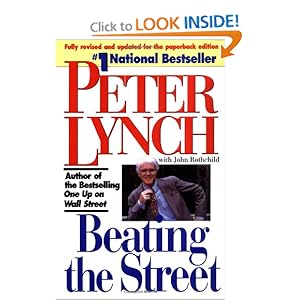
My favorite is an oldie but a goodie. I recommended Peter Lynch's Beating the Street. I wrote a brief review of this book two years ago on Amazon. You can read the review here.

Lynch lays out a solid strategy for beginners that focuses on the long-term. It's simple and sensible advice that anyone can follow. The chapters on how to pick great stocks and read balance sheets are definitely worth the price of admission.

But once you become a little more savvy and want to go deeper, NOTHING beats The Intelligent Investor by Benjamin Graham.

This is the bible of investing as far as I'm concerned. It's also the ONE book that Warren Buffet would tell you to go out and buy if you asked him yourself. In fact, this is the book that helped catapult Buffet to investment greatness.

The Intelligent Investor was first published in 1949 but  it remains 100% relevant in todays market. Buy it and apply it, and Mr. Market will never fool you again.

So what about you? Which book would you recommend to a new investor?

The Guys at 37 Signals Really Break it Down in REWORK!

If 7-UP was the "un-cola" then Jason Fried and David Heinemeier Hansson's REWORK is the un-business book.

In other words, it's unlike any business book you've ever read, and that's a very good thing

It's piercingly original, smart, thoughtful, edgy, iconoclastic, funny, profound, profane, persuasive, AND, surprisingly inspirational. Whew!

In other words, you need to read this book! Period.

The powerful advice contained in its pages applies to would-be entrepreneurs, CEOs, marketers, customer service personnel, HR reps, or just about anyone who has anything to do with running a business. Inside you'll find clever advice you won't hear anywhere else:
  • Planning is guessing
  • Why grow?
  • Fire the workaholics
  • Make a dent in the universe
  • Scratch your own itch
  • Outside money is Plan Z
  • Emulate drug dealers
  • Meetings are toxic
  • Go to sleep
  • ASAP is poison
These nuggets of wisdom are brought to you by the two guys who founded 37 Signals, a small but very successful software company who's built a loyal following by creating innovative and highly usable software that empowers people to manage their projects, track their interactions with customers and collaborate more effectively.

You can probably read 5 or 10 regular business books and not glean as much shrewd advice as you can  from Fried's and Heinemeier Hansson's work. These guys have broken all the rules and won.

But not only that, we live in a world where the old rules don't work anymore and the new rules aren't always clear. That's why REWORK is an important book for you to have. It cuts through the noise. These guys have mapped out some of the new terrain and it's a map very worthy of your consideration.

Also, check out this 30 min interview with Jason Fried.

Career and Job Advice in a Manga! Thanks Dan!

When I was a kid, I loved reading comic books like Spiderman and the Xmen. In fact, my dream was to one day move to New York City to create and illustrate stories for Marvel Comics. That hasn't happened yet but my point is that I've always had a soft spot in my heart for the medium.

So imagine my surprise, and delight, when I came across Dan Pink's The Adventures of Johnny Bunko, a Japanese manga, which builds on some of the concepts espoused in his earlier book, A Whole New Mind, and which manages to proffer some very useful and pithy career advice.


Here's the premise: Johnny Bunko is a pretty good (albeit somewhat dense) kid fresh out of school who is now suffering in his cubicle at the Boggs Corporation. He works on endless reports and excel spreadsheets for a depostic and clueless boss.

Johnny is desperate, and in pain, because he's toiling for long hours working on things he doesn't particularly like or isn't particularly good at. What ensues is a playful tale involving magical chopsticks, a genie slash career counselor, and 6 valuable lessons no one ever bothered to teach Johnny (or any of us, for that matter).

Cool stuff indeed!

I believe that Dan Pink has become a must-read author like Seth Godin and Chris Anderson. When these thought-leaders have something to say, you better believe that I'm ALL ears. I buy everything they produce, no questions asked.

And I love that Pink seems to be fully incorporating the ideas that he explored in a Whole New Mind (which I will tackle in a forthcoming post). He's tapping into his creative and artistic side and has produced a unique work in the vein of past books like Eliyahu Goldratt's The Goal and Kenneth Blanchard's Who Moved My Cheese. These books not only tackled meaty business issues but did so with creativity and panache.

I recommend you read Johnny Bunko for yourself and then pass it on to a high schooler near you.

And on a related note, we should all try to be a little more creative and artistic at work. We're all born artists afterall, and while we can't all work at Marvel Comics, you have creativity and art in you that can enhance your place of work or your business.

Dan Pink's teaching us not to be afraid to work with the right side of our brain. It's a lesson worth taking to heart.

If You're In Business You Need to Read This Book!

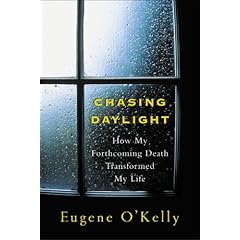
I just finished reading Eugene O'Kelly's moving and thought-provoking book Chasing Daylight: How My Forthcoming Death Transformed My Life.

In June of 2005, O'Kelly, the highly successful CEO of KPMG, one of the nation's top accounting firms, was given some bone-jarring news. The doctors told him that he had a glioblastoma, a type of cancer that uses glial cells to wage war against the healthy cells in the brain.

And the tumors where doing their work with ruthless efficiency. Neither surgery, nor chemo or radiation, would do much good. His life was just about over, the doctors told him, he had 2, maybe 3 months to live.
"Wow. Is there any way, really, to prepare for the suddenness? To have that tucked-away fear that lives constantly in all of us - that a calamity can happen, technically, at any moment - be transformed, within days or moments, into reality? To have that fear that you can bury at least sometimes, even most of the time, explode into a new state of being that you can't deny for even a second?

It was beyond jarring...I'd been catapulted into the last phase of my life, the one where I was supposed to be wise - wise for my daughters, my grandchildren, those younger than me. Except I'd missed a key stretch of life and still had a lot to learn.

But that was where I was. And if I was going to be of any use to my daughters, especially Gina, and to my friends and colleagues, and to Corinne, whose preternatural wisdom I'd relied on for so long, I had better get used to where I was fast."
O'Kelly pursued dying as he did living, with passion, focus, and, true to his Type A personality, a deep-seeded obsession with setting and achieving goals.

He went immediately to work. The book documents the process of his "unwindings" and his struggle to stay clear and level-headed while fighting the ravages of his disease.

But despite the struggles, he insists that his diagnosis was actually a blessing. He was lucky in that his tumors did their work without inflicting much pain. And he adds that his sense of what's truly important and the importance of savoring perfect moments was heightened to levels most people are unable to achieve in life.

He sometimes pauses, though,  to wish he had spent more days with his wife Corinne chasing daylight out on a beautiful golf course, or spent more time creating and savoring perfect moments in everyday life.

"I was just too caught up in my fast-paced, high-pressure life to ever get at the sublimeness that was embedded in them," he writes.

But ultimately, O'Kelly was succesful in meeting most of his goals during his transition. Although he went about it with an accountant's sense of focus and strict discipline, it ultimately allowed him to inject meaning into the process and create peace and a sense of closure.

Although he died in September of 2005 without finishing the book (his wife wrote the last chapter) he left this world at peace knowing he had done everything he could do. He slipped away gently on September 10th.

It's not easy to think about the end, it's much, much easier to avoid "tucked-away fears", but I think it's crucial for us to STOP and reflect on how we're living today. Eugene O'Kelly died at peace because he didn't have any great regrets and what others might have seen as a curse he saw as a gift. Wow! There's amazing lesson in that for all of us.

He accepted responsibility for his condition without lament, and did the best to live out his remaining days with love and dignity.

I highly recommend that you read this book. It's Eugene O'Kelly's gift to all of us.

How to Make Your Powerpoint Presentations Shine!

After sitting in on scores of Powerpoint presentations, and after giving scores of such presentations myself, I can most emphatically declare that Cliff Atkinson is right.

We need to move BEYOND bullet points.

I mean, when was the last time that you were truly moved, or inspired, or educated, or persuaded by a deck of Powerpoint slides?

Just the mere mention of the word "Powerpoint" makes your eyes glaze over and your mind wander.

It's no wonder, 9 out of 10 Powerpoint slides that I see seem to be deliberately designed to overwhelm and confuse you. In fact, the more information that you can pack into your slides, the more effective MANY in the misinformed corporate ranks think your presentation is.

Whether the audience captures, engages with, or even understands your message is beside the point. Dump the information on them and after that, they're on their own.

But that's not communication, in fact, it's quite the opposite. It's MIS-communication.

And I'm NOT suggesting that Powerpoint is a BAD tool, or that you SHOULDN'T use it, simply, that you should learn how to use it correctly.

That's what Atkinson's book "Beyond Bullet Points" is all about.

Atkinson's message is simple: the human brain has limited bandwidth. Neuroscience seems to bears this out. As sophisticated and infinitely complex as our minds really are, our working memory- the memory your brain uses to make sense of what you're seeing, hearing and perceiving- is SCHOCKINGLY limited. We're talking bits here, NOT megabytes!

To put a not-so-fine a point on it, a person simply CANNOT read your overstuffed Powerpoint slides while simultaneously processing the message that's coming out of your mouth.

The point of the Powerpoint presentation is NOT to have your audience sit there and read (couldn't you have sent them a PDF or Word file instead)? No, the point of Powerpoint is for you to wow and dazzle them with your message. The slides are visual cues that help reinforce and add impact to what you're saying. They help make your message "stick."

Here's some more of Atkinson's invaluable advice:
  1. Before you launch your copy of Powerpoint, sit down with pencil and paper and decide what the structure of your message is going to be. Think of your presentation as a story divided into Acts. Atkinson provides many "Story Templates" that you can use to determine the core message you want your audience to understand, or what specific action(s) you want them to take? Stories help people remember and connect with your message.
  2. Sketch out your slides on paper before working in Powerpoint. This technique will help you clarify your message and free-up your creativity.
  3. Keep your slides simple. A simple headline that can be read in a few seconds and a simple visual image that helps your audience instantly grasp what you're communicating make for a POWERFUL combination.
  4. Pick your graphics carefully and make sure they set the right tone. Powerpoint clipart makes your slides look amateurish and cookie-cutter. Subscribe to iStockPhoto to download affordable, professional quality stock photography and clip-art. Make sure that whatever images you choose will resonate with your audience.
  5. Don't be afraid of white backgrounds, but whatever color your choose, make sure it doesn't clutter things up or make your text unreadable.
  6. Use a navigation system to show where in the presentation your currently are. If your presentation has 3 parts, make sure you at least have a large 1, 2, or 3 somewhere on the slide to let your audience know which part of the story they're on.
  7. If your audience is highly technical or heavily business oriented, resist the temptation to over-clutter your slides with charts, tables, numbers and other left-brain work product. Your Powerpoint is about wowing and dazzling, remember? It's not about putting people to sleep. To placate hard-core left brainers, use hand-outs or supplements with all the mind-numbing hard-data their hearts desire. Hand these out at the end or email it to them afterwards to make sure they pay attention to you during your presentation.
So there you have it. Let's take back PowerPoint and restore it to it's rightful place in business. Let's move beyond bullet points and into the realm of creativity. Think razzle. Think dazzle.


Best Business Books of 2009?

There's already much written on the Web about the best business books of 2009, so I'll pass on putting together my own list.

I will, however, note that one title has been conspicuously missing, at least from the lists I've seen.

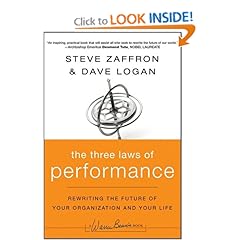
That book, is The Three Laws of Performance by Steve Zaffron & Dave Logan.

No, this book is NOT about greedy bankers, the failure of rational markets, or how Google, Facebook and Twitter are taking over our increasingly warmer and despoiled world.

It's about something much more fundamental (and elemental) than technology or the current economic woes that have befallen our planet.

It's about increasing the performance of individuals, and the organizations of which they are a part.

It's about becoming a much stronger leader by gaining an incisive understanding of why indviduals or companies behave the way they do, and how YOU can use the Three Laws of Performance to raise the stakes and realize massive performance gains.

At the risk of indulging in hyperbole, I have to say that this book rocked my world!

The language and message is so deceptively simple that it's easy to under appreciate it's sizable significance.

The point is not lost on Warren Bennis, the renowned leadership and business expert who helped edit the book. In his own words he said,
"I believe this book may be one of the most important written in many years. The ideas are much larger than what we normally see in business books. They aren't tips, tools or steps, but are in fact laws...The stories aren't the normal ones we read about in business; rather they are illustrations of organizations bringing out the best in people and in communities. These aren't just companies making a profit, but companies doing well in the world, by any measure. Leaders would be well served to think about these laws and find ways to apply their insights."
You can take Bennis' words as those of a self-interested editor, but I whole-heartedly agree with his estimation of this book's importance. In fact, I'll go out on a limb and say that you ignore this book at your own peril.

That's how impactful I think this book can be for you.

So what are these incredibly profound laws that hold the key to transforming your personal and work life? Here they are:

The First Law: "How people perform correlate to how situations occur to them.

The Second Law: "How a situation occurs arises in language"

The Third Law: "Future-based language transforms how situations occur to people."

When I first read these I was taken aback, way back! "Is that it", I asked?

The laws were disorienting to me, in the sense that I have NEVER come across a prescription for improved performance that emphasized the importance of "occurrence" or "language" as being THE central core of ANY performance problem.

But Great ideas are almost by definition DISRUPTIVE. They force you to think in new ways--ways that are incompatible with what you thought before.

But Zaffron and Logan are on to something real, perhaps a new paradigm for real leadership in the 21st century. Leadership that revolves around the very careful use of language to create what has been dubbed the "self-led" organization.

If this economic crisis that we're facing, or the wholesale evaporation or dismantling of huge enterprises like Enron, GM, AIG and Lehman Brothers has thought us anything, it's this: strap on your set belt because the old ways of doing business are falling rapidly by the way side. What worked before won't work anymore.

In this bold new future, ruled by the technological innovations that enable more human connections, more people will want a say in their own future and in the future of your organization.

Will you allow them to have their say? Do you have a choice any longer?

By combining ideas from lingustics, brain science, sociology, psychology and more, the authors have created something that is refreshingly NEW.

It's a remarkable business book filled with real-world examples of how companies and individuals turned impossible situations into empowering ones. This book holds the secret to unlocking whatever performance problem you're facing.

...if you'll only give it a chance.


How to Run Meetings that are REALLY Productive

Face it, most corporate meetings tend to be unproductive.

Many people dislike meetings because they see them as needless distractions or time wasters. You go into a meeting thinking, "I hope this is quick and painless, I have tons of 'real work' to do."

But meetings ARE real work.

Meetings are a great opportunity to communicate and collaborate-- and to BOOST productivity, not decrease it.

But that's not the way most meetings are run, is it?

Most meetings are BORING. And the managers who run them do a poor job of tapping into the talents of the group.

Most meetings fail to generate creative ideas and solutions; they fail to anticipate potential pitfalls of any given course of action; and they fail to solicit unvarnished feedback to ensure that everyone in the group has a say in the decisions that are made.

It's true. Most meetings are not collaborative and they're barely communicative.

If your meetings are taking too long, or if you feel that they're not as productive as they could be, then Edward de Bono's The Six Thinking Hats will be a revelation.

I read this book YEARS ago, but it has made a lasting impact. Some books leave indelible marks.

Maybe it's because De Bono's ideas about parallel thinking are both simple and profound.

But the best way to explain it is with a ficional case study. So here goes...

Imagine that your company's latest customer satisfaction survey showed a 20 point decline in customer satisfaction.

What are you going to do about it?

If you're like most managers, you'll devise a plan to reverse the trend and call a meeting to announce and detail your plan of action.

You don't ask for feedback. You don't ask for ideas. You're the manager and YOU know what needs to be done.

So you assemble your team and in a stern and slightly alarmed fashion announce the survey results.

Everyone is stunned.

They're working harder than ever, especially during this terrible recession, and yet customer satisfaction is at an all time low?

Deep down inside each one of them feels a little defeated. They're not sure what more they can do.

But then you step in with the answer.

"Here's how we're going to fix this," you state proudly.

Then you lay out your action plan. To your employees, it looks like a LOT more work.

Some of them are alarmed enough to embrace your action plan, if somewhat reluctantly. Others are skeptical and even more reluctant. They're not sure how much MORE work they can do.

Others simply resent your message because it sounds like TOO much work and TOO much responsibility. After all, THEIR customer service level is fine just the way it is.

And still others, are so stressed-out and so busy thinking about their workload that they're mostly tuning you out.

So finally, you field a few questions and adjourn the meeting thinking that hey got your message. And you think they'll comply.

Ninety days later, your customer satisfaction score hasn't improved. Instead, it dropped another 5 points!!

So what do you do now, call ANOTHER meeting and repeat the cycle all over again?

Using De Bono's Six Thinking Hats allows you to be more proactive than that.

Under his system, you would use the BLUE hat to state the purpose of the initial meeting: to announce and discuss the survey results, and discuss ideas on how to reverse the trend.

The Blue hat is like a judge in a courtroom.

The judge controls the proceedings but EVERYONE (the plaintiff AND defendant) is given time to speak.

Like the 'blue sky' that envelopes everything, the BLUE hat envelopes and controls all the other hats. That's why the manager usually wears the BLUE hat.

Once you announce the survey results, you might then switch to the WHITE hat.

The WHITE hat (think of a scientist in a white lab coat) is ONLY concerned with facts. What's the data? What information do we have? What information is missing?

Under the white hat, everyone discusses the survey findings.

It turns out, that while the average customer satisfaction score is down 20 points, the number of customers that gave the company an EXCELLENT customer service rating is up by 7%. And upon closer inspection, the data does not specify in what areas of service the company ranked poorly in. Was it order errors, delivery times, hold times on the phone, what?

After looking at the data, you move to the RED HAT.

The RED hat is all about speaking from the heart.

It allows everyone, one by one, to express their emotions without the need to justify those emotions in any way. And NO ONE is allowed to judge or make negative comments about the emotions being expressed.

The RED hat gives everyone a chance to vent.

It's interesting that many people think that emotions are messy and complicated, and that they have NO place at work.

That's ridiculous.

Human beings are EMOTIONAL creatures.

We may have access to rational thought but at the end of the day, we do what FEELS good or FEELS right.

Emotions are part of the work environment whether you like it or not, so why not create some mechanism by which get them out into the open where you can deal with them more effectively.

So, after everyone gets a chance to vent, the manager moves the conversation to the YELLOW hat.

The YELOW hat (think sunshine) is all about finding value in ANY situation. While 'wearing' the YELLOW hat everyone is encouraged to think of ways that this problem is actually a GOOD thing.

"Look," says one of your team members. "This is an opportunity to demonstrate to our customers, by actions and not words, that we really care about them."

"That's right", says another. "This is good because now we can work to find out why exactly some customers rated us as EXCELLENT and others as VERY POOR. This is an opportunity to improve our survey methods."

One by one, every team member is given a chance to find value in the current situation. That's powerful!

The next step is to don the GREEN hat -- the hat of ideas!

While wearing the GREEN hat everyone is encouraged to contribute ideas and craft the action plan. The effect is profound. Now, EVERYONE is focused on how to fix the problem. EVERYONE gets to contribute their skills and talents towards the goal of reversing the trend of declining customer satisfaction. EVERYONE has a say, not just management.

Once the group has come up with various ideas, it's time to wear the BLACK hat.

The BLACK hat is about constructive criticism. The BLACK hat is all about trying to anticipate what could go wrong with some of the ideas presented.

The BLACK hat is easy to wear because it's easy to criticize and find fault.

Humans are hardwired to anticipate and avoid danger in order to say safe. That's a GOOD thing!

The BLACK hat is an extremely useful hat but once you stop wearing it, you are no longer allowed to be negative.

Also, the BLACK hat is NOT about emotion. You're not allowed to say, "This plan sucks!" That's RED hat.

You are, however, allowed to say something like, "Sending a memo to our customers apologizing for our bad customer service is a bad idea because it will be perceived as hot air."

The BLACK hat allows you to be negative, as long as you have a REASON to support your view. It's the logical, rational underpinnings of the BLACK hat that make it so valuable.

Once everyone has worn the BLUE, WHITE, RED, YELLOW, GREEN and BLACK hats, you may choose to end the meeting with another RED hat.

You'll see that emotions may have shifted. What looked like doom and gloom 30 minutes ago, now looks manageable.

Your team now sees opportunities where they once saw only problems. Everyone participated in the meeting and so they feel like their views were respected and heard. Everyone had a say in how to respond to the 'problem' and so they are more likely to be committed to a successful outcome.

That's the beauty of the Six Thinking Hats.

Now, I'm sure this process may seem gimmicky to some, maybe even silly to the hardened skeptic, but parallel thinking works.

Don't let the colorful hat metaphor confuse you into thinking this is pollyanna.

Go ahead and call it whatever you want... 6 thinking hats, cognitive modalities, parallel thinking, WHATEVER! Collaborate with your peers in this fashion and you will transform yourself and your business, never mind running great meetings!

Amazon price: $10 + shipping.


How to Double Your Sales in 2010 - Listen to This!

Jeffrey Gitomer is passionate about sales.

His presentations are full of bluster and bravado, but his philosophy is rooted in strong ethical and idealistic beliefs.

Gitomer wants you to make more money in sales, but he wants you to do it right. "Selling is easy" he says, but only if you approach it correctly. "If you do it right, you can make sales forever," he adds.

Unfortunately, 95% of sales people (according to Gitomer) are going about it ALL wrong.

Maybe you're among the ranks of sales people with lots of questions about how to prospect more effectively, make more appointments, and close more deals.

Maybe you have questions about how to counter stall tactics, sales resistance and price objections.

The answer to those questions, and many more, are all there if you listen carefully.

But be forewarned: Gitomer wastes NO time in sugar-coating his answers. Although he speaks the truth, he's gonna give you a heavy dose of tough love.

You'll be fine as long as you put your "sensitivity meter" on low.

After listening to all 5 CDs, Gitomer's central point is clear. To become a better sales person, you need to take RESPONSIBILITY for your results.

That means that if you're not meeting your sales quota every month,
  • it isn't your boss' fault;
  • it isn't your customers' fault;
  • and it isn't the economy's fault...
It's YOUR fault.

That's not easy to hear. But it's a good message to take to heart, whether you're in sales or not.

Before you can create better results, you need to own up to the results you have already created, good or bad. Don't blame external forces. YOU run the show.

Simple.

Gitomer's second key point is that before you can hope to close a sale, you must first do the "hard work" of creating value for the prospect and customer.

"What are you doing to create value," he asks?

Your best customers already understand the value of the products and services you provide--that's why they pay your price and don't gripe about it.

Price objections, stall tactics, and other forms of resistance are all symptoms. They're NOT the real problem, as Gitomer sees it.

If they're fighting you on price it's because you haven't done a good-enough job of offering value. And by the time they complain to you that the price is TOO HIGH, it's TOO LATE!

Gitomer goes on to give you idea after idea on how to add value FIRST. Here are just a few:
  • be likable and trustworthy
  • know your customers' needs (know why they buy)
  • ask powerful questions
  • treat prospects and customers like friends
  • make them laugh (and you'll laugh all the way to the bank)
  • find leads for your customers (give referrals to earn referrals)
  • become a public speaker
  • write a weekly newsletter
  • create a useful web site
Nothing in Gitomer's book is particularly ground-breaking or original, but he delivers the material in a funny and energetic style that will get you pumped up and ready to close more deals.

So you say you wanna double your sales in 2010? Listen to Gitomer's Sales Answers, and more importantly, follow through on his advice.

I burned the CDs and loaded them up on my iPod so I can have access to them on my drives to and from work.

Gitomer's very entertaining and he makes a lot of sense. If you're in sales, it's an audio book you absolutely gotta have. I've seen the 5 CD audio book available online for as little as $10!

Talk about the best deal you'll ever make!

Happy Selling.